
When sales, recruiters and site coordinators maintain separate records, handovers become harder to track. Give each requirement a clear owner and next action.
Manpower Agency CRM Software
- Home
- Business Software Solutions for Your Industry
- Manpower Agency CRM Software
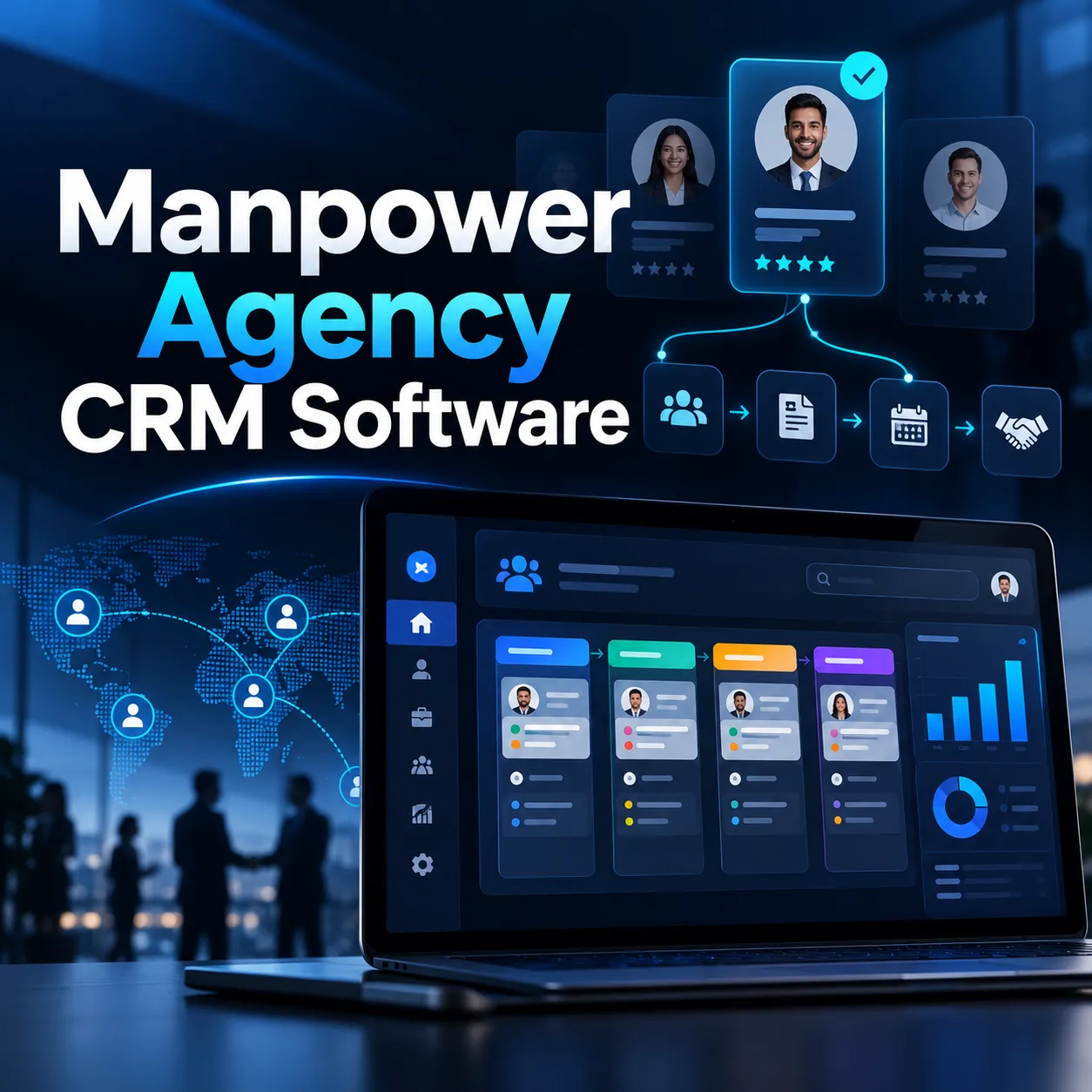
Manpower Agency CRM Software
Keep client commitments and staffing activity in the same operational picture. Unity Infoway helps manpower agencies plan a CRM around enquiries, job requirements, candidate coordination, deployment and commercial follow-ups.
Build around the work your agency actually does: permanent recruitment, contract staffing or a combination. Start with the workflows your team needs now, then assess attendance, billing and reporting extensions against an agreed scope.
Losing visibility between the client requirement and the actual deployment?
Scattered client requirements
Keep requested roles, locations, headcount, joining dates and commercial terms together instead of reconstructing requirements from calls and spreadsheets.
Repeated candidate follow-ups
Make interview status, document requests and joining confirmations visible so the next recruiter can continue without starting the conversation again.
Deployment changes without context
Track who joined, who needs replacement and which assignments are ending. Keep each change tied to the relevant client and site.
Billing disputes at month-end
Connect approved attendance or placement milestones with billing inputs, while retaining the source records needed to explain adjustments.
Join us on your path to future success

Follow every requirement from enquiry to collection
Define a practical staffing lifecycle with named responsibilities, status changes and exception handling. An illustrative contract-staffing flow is:
Capture the requirement
Record client, location, role, headcount, rate basis and target start date.
Coordinate candidates
Assign recruiters, shortlist suitable records and capture interview or selection outcomes.
Prepare onboarding
Collect agreed documents, confirm joining and flag incomplete onboarding tasks.
Allocate and deploy
Link workers to assignments, sites and supervisors; record starts, transfers and replacements.
Approve billing inputs
Review attendance, approved adjustments and chargeable units against the client contract.
Invoice and follow up
Track invoice status, receipts, pending amounts and upcoming contract renewals.
A connected workspace for staffing operations
Select the modules that fit your business. Each capability below is a scope option to confirm during discovery, not a universal package inclusion.
Client CRM
Organize company contacts, enquiry sources, follow-up tasks and account ownership.
Job requirements
Capture role specifications, requested headcount, site details and fulfilment deadlines.
Candidate records
Maintain searchable profiles, skills, availability and document status with appropriate access controls.
Recruitment pipeline
Track shortlisting, interviews, offers, joining confirmations and reasons for drop-off.
Deployment management
Connect workers to client assignments, shift expectations, transfers and replacement requests.
Attendance inputs
Collect or import approved attendance and timesheets using the agreed format and review process.
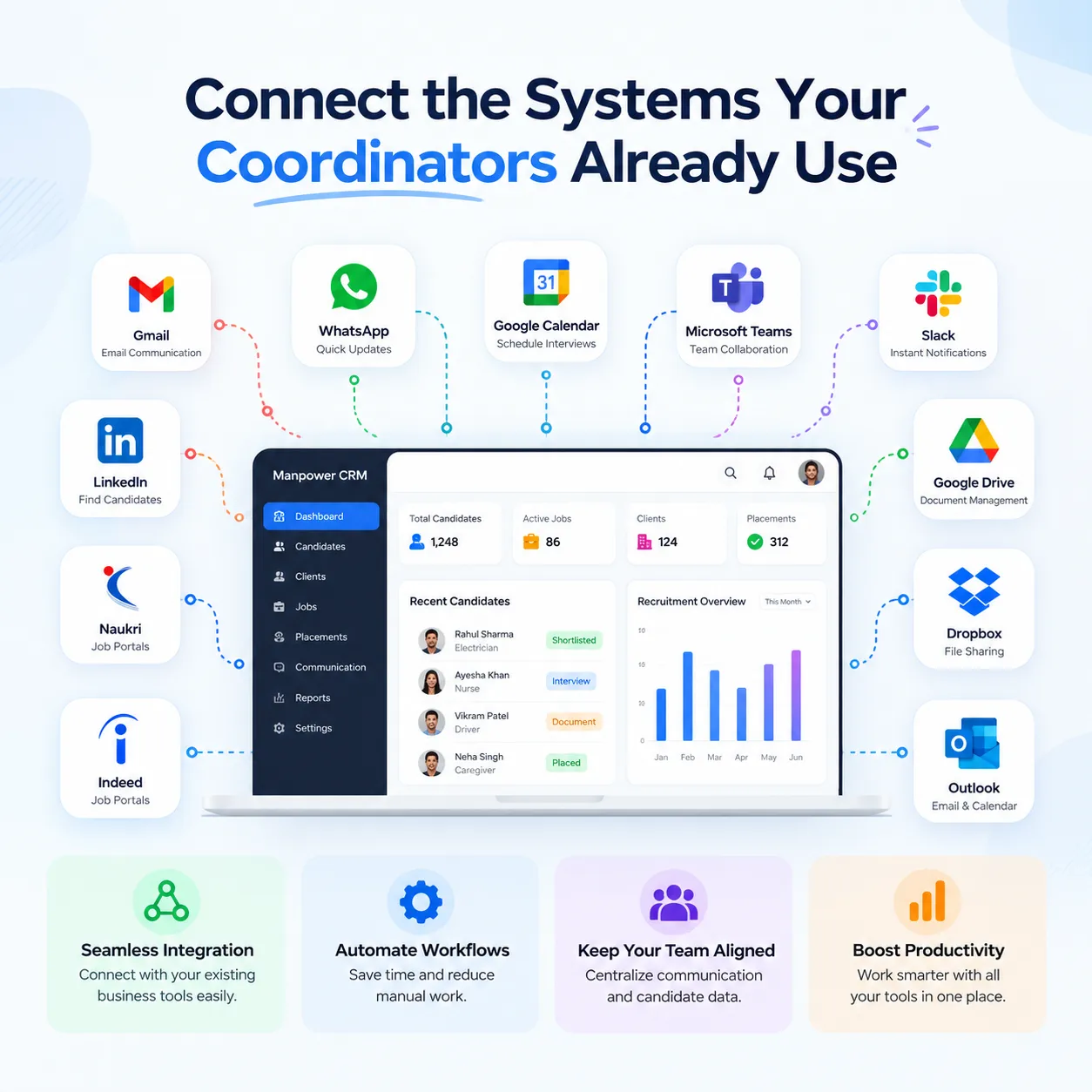
Connect the systems your coordinators already use
Assess website enquiry forms, attendance sources, accounting exports and approved messaging channels against available APIs and data permissions. Custom web development can support agency-specific portals, while mobile app development can be evaluated for field teams. Integration availability, third-party fees and responsibility for data accuracy are agreed before implementation.
Payroll calculations, statutory submissions, biometric hardware and background verification services require separate assessment. The CRM should not be presented as automatically handling every employment or compliance obligation.
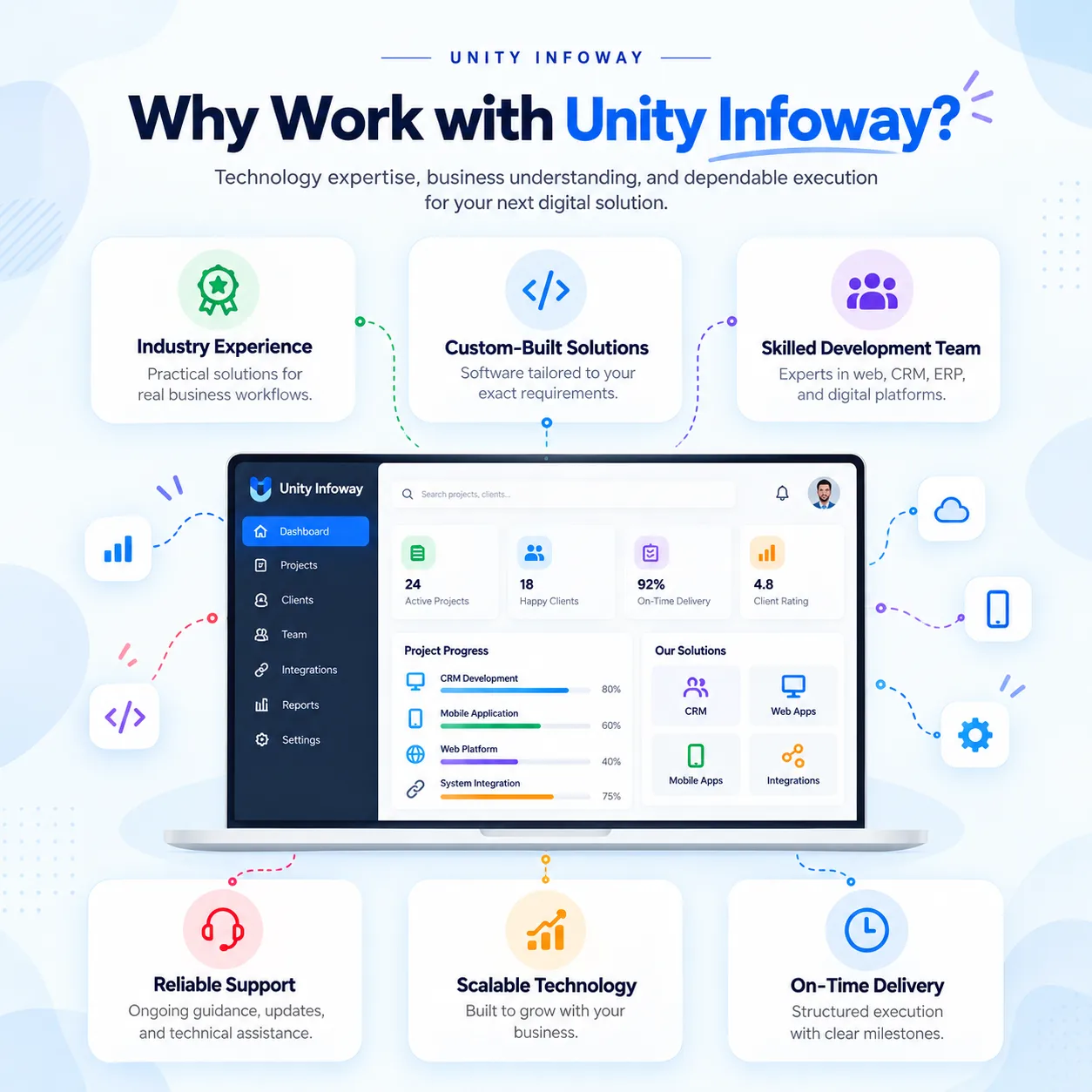
Why work with Unity Infoway?
Work with Unity Infoway to define the staffing handovers before adding more screens. Our development process provides a starting point for discussing discovery, technical decisions and project delivery.
Perfex CRM customization – For agencies assessing an extension of an existing Perfex installation.
WhatsApp chatbot and automation – For eligible, consent-based enquiry handling and follow-up workflows.
Frequently Asked Questions
How is a manpower CRM different from an applicant tracking system?
A CRM focuses on clients, enquiries and commercial relationships. An applicant tracking system focuses on candidates and recruitment stages. A manpower agency solution can connect both with deployment and billing, provided those workflows are included in the agreed implementation.
Can one system support permanent and contract staffing?
Yes, a combined implementation can be scoped, but the workflows should remain distinct. Permanent placements usually need vacancy and placement milestones; contract staffing needs assignments, attendance inputs and recurring billing rules. Discovery defines which records and reports can be shared.
Does the solution include payroll and attendance devices?
Attendance collection or import can be included. Payroll calculations, statutory reporting and biometric integration are separate requirements. Share the devices, payroll software and approval rules you use so compatibility and responsibilities can be assessed before the scope is finalized.
Can we migrate candidate and client data from Excel?
Migration can be planned after reviewing sample files, duplicates, mandatory fields and permissions to use the data. Agree which records and attachments will move, how rejected rows are handled and who approves the trial import before production migration.
Can recruiters and site supervisors have different access?
Role-based and site-based access can be designed around your responsibilities. For example, a coordinator may update an assigned deployment while finance controls billing. The precise visibility, export rights and approval permissions should be tested with representative users.
Can it connect to our website, accounting system or messaging provider?
Connections can be assessed where supported APIs, import formats or authorized connectors are available. Each integration needs defined data direction, field mapping, failure handling and access credentials. A named third-party system is not automatically a standard integration.
Can the system be hosted on our own server?
Client-managed hosting can be considered after checking application requirements, infrastructure and support ownership. The proposal should state who handles backups, access management, updates and recovery. Mobile access and any native applications also need to be included explicitly.
How much does a manpower agency CRM cost?
Cost and delivery depend on the staffing model, selected modules, migration, integrations and reporting complexity. Share your client count, active assignments, user roles and sample billing process to receive a scoped proposal rather than a generic price promise.
Your subscription could not be saved. Please try again.
Your subscription has been successful.
Address
412, 4th Floor, Radhe Infinity, Rakshashakti Circle, Kudasan, Gandhinagar – 382421.