
Building Maintenance Management Software
- Home
- Business Software Solutions for Your Industry
- Building Maintenance Management Software
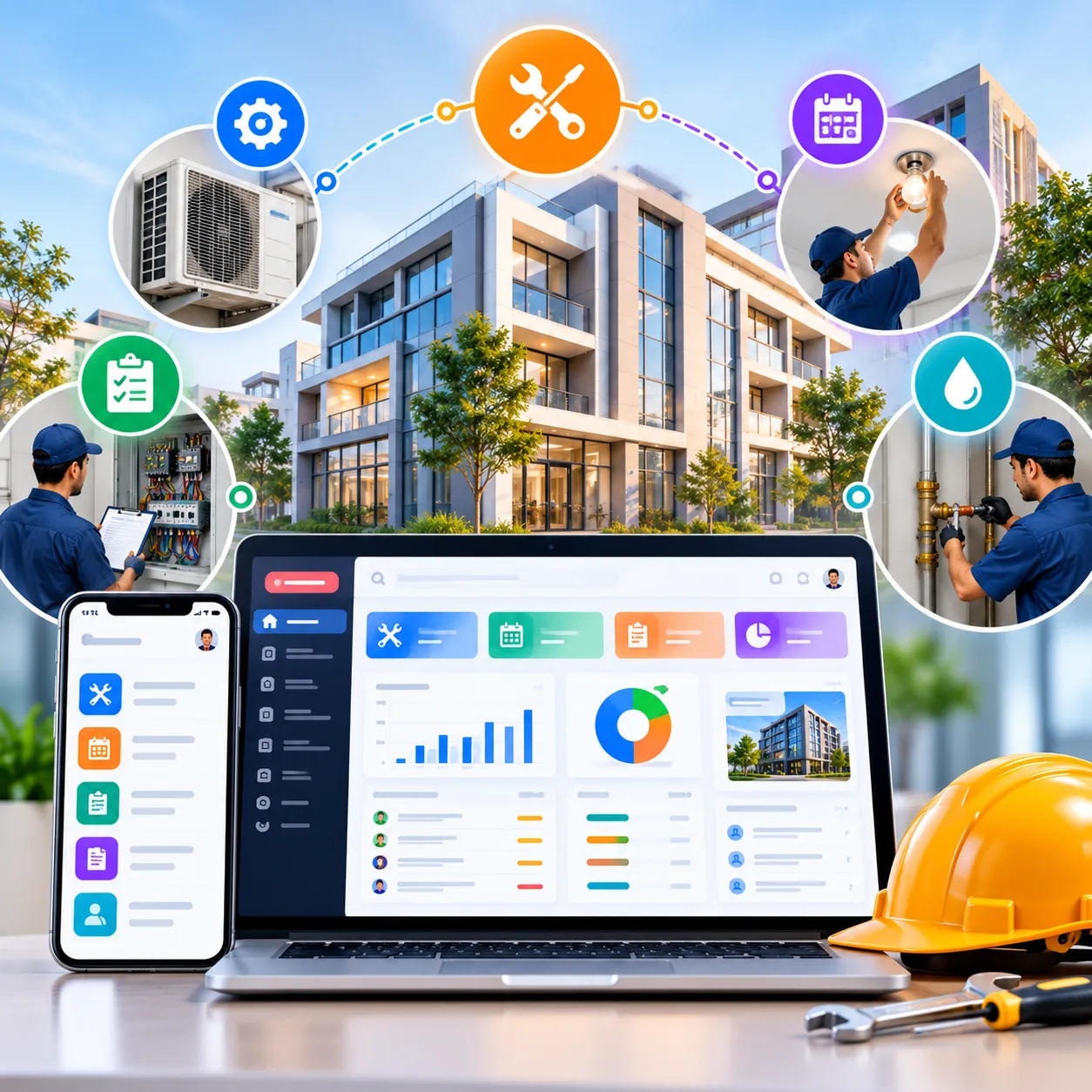
Building Maintenance Management Software
Give every maintenance request a clear route from reporting to resolution. Unity Infoway helps facility teams plan building maintenance software around assets, work orders, preventive schedules, technicians, vendors and service history.
Replace disconnected complaint registers and follow-up messages with defined responsibilities and visible status. Start with one building or workflow, then assess the controls needed for multiple properties, contractors and asset categories.
Is maintenance history spread across calls, registers and contractor messages?
Without a consistent work order, it is difficult to know who is responsible, what was checked and whether a recurring issue was actually resolved.
Requests arrive without usable details
Capture location, asset reference, issue description, photos and the appropriate priority so a coordinator can assign the work.
Preventive tasks are easy to miss
Maintain due schedules and required checklists, with clear ownership and review of overdue or deferred work.
Vendor follow-ups depend on one person
Connect external service visits, contract references and approvals to the asset or work order rather than a private message thread
Repeat failures lack a visible history
Keep previous actions, parts used and completion notes available when the same equipment or location needs attention again.
Join us on your path to future success

Follow maintenance work from request to verified completion
Create separate routes for reactive issues and planned work, while using a shared record of responsibility, action and outcome.
Report or schedule
Capture a service request or generate work from an approved maintenance plan.
Review and prioritize
Check location, asset, urgency and the appropriate service responsibility.
Assign the work
Allocate a technician or vendor and record the expected action.
Perform and document
Complete agreed checks, add observations and record parts or costs where required.
Verify completion
Review evidence, resolve outstanding actions and obtain the agreed sign-off.
Review service history
Analyse repeat issues, overdue work and upcoming maintenance commitments.
Modules for accountable maintenance coordination
Choose the capabilities relevant to your properties and contracts. Asset depth, mobile access, notifications and integrations must be confirmed in the implementation scope.
Property and location records
Organize buildings, floors, zones and service areas using a consistent location structure.
Asset register
Maintain equipment references, documents, service responsibilities and relevant warranty information.
Service requests
Capture issues, supporting details, priority and the person responsible for review.
Work orders
Track assignments, status changes, approvals and the actions required to close work.
Preventive maintenance
Define recurring schedules and asset-specific checklists with overdue-task visibility.
Technician coordination
Allocate work and capture task updates, observations and completion evidence.
Suitable for property operations and maintenance service teams
Start by deciding whether the system serves one owner, several client properties or an outsourced service contract. That choice affects permissions, reporting and billing requirements.
Commercial properties
Coordinate shared services, tenant-reported issues and contracted maintenance.
Residential communities
Organize common-area issues and property operations without assuming a complete society-accounting suite.
Institutions and campuses
Track work across buildings, departments and shared equipment
Maintenance contractors
Assess client-site separation, technician coordination and service documentation.

Connect field work with the systems that support it
Assess email or portal intake, authorized accounting exports and approved notification channels. Mobile app development can support field-specific experiences where needed, while hosting solutions can be reviewed against access and backup requirements. Sensor feeds, building systems and offline synchronization require a separate technical assessment.
This solution focuses on maintenance coordination. Rent collection, lease administration, emergency dispatch and building-management control systems are separate scopes. Urgent hazards must follow the property’s approved emergency process, not rely solely on a ticket queue.
Why work with Unity Infoway?
A useful maintenance system makes responsibility and completion evidence clear. Review Unity Infoway’s development process when defining a pilot, operational sign-off and the next rollout stage.
Explore related solutions
Kitchen equipment ERP and CRM – For suppliers connecting equipment delivery with installation and after-sales service.
WhatsApp chatbot and automation – Assess eligible request intake and service updates through an approved channel.

Frequently Asked Questions
Is building maintenance software the same as property management software?
Not necessarily. Maintenance software focuses on assets, work orders and service activity. Property management may also cover leases, rent and tenant accounting. Define which responsibilities are required so the implementation does not imply a complete property-management suite.
Can it manage multiple buildings and external contractors?
Multi-building and contractor workflows can be scoped with property-specific access and consolidated reporting. Agree who can view client data, assign technicians, approve costs and close work. External users should receive only the permissions needed for their tasks.
Can scheduled and breakdown maintenance be managed together?
Yes, the workflow can combine reactive requests with planned maintenance schedules. Each needs clear priorities, due dates and completion rules. The system can organize the work, but qualified personnel remain responsible for inspections and technical decisions.
Can annual maintenance contracts and renewal dates be tracked?
Contract references, coverage details, service visits and renewal reminders can be included. Confirm whether the system only tracks agreements or also calculates service charges and invoices. Vendor performance summaries depend on the information actually recorded.
Can parts usage and maintenance expenses be recorded?
Parts issues, purchase references and agreed expense records can be added to work orders. Inventory valuation, procurement approvals and accounting integration need separate definition. Decide whether the maintenance system or another application owns the stock and financial records.
Can technicians update jobs from a phone without internet?
Mobile access can be assessed, but offline operation is a separate requirement. Offline updates need synchronization, conflict handling and device controls. Share the connectivity conditions at your sites before deciding whether responsive web access is sufficient.
How can private building and tenant information be protected?
Use role-based access, restricted exports and clear separation between properties where needed. Agree retention, backups and attachment access. Avoid exposing private work orders through public links; technical safeguards should reflect the operator's data-handling policies.
What determines pricing and implementation time?
The main drivers are properties, asset records, user roles, work-order complexity, migration and integrations. A pilot with representative assets and maintenance cases can help define a practical scope before expanding across all locations.
Address
412, 4th Floor, Radhe Infinity, Rakshashakti Circle, Kudasan, Gandhinagar – 382421.