
Grocery Ordering & Delivery Software
- Home
- Business Software Solutions for Your Industry
- Grocery Ordering & Delivery Software
Grocery Ordering & Delivery Software
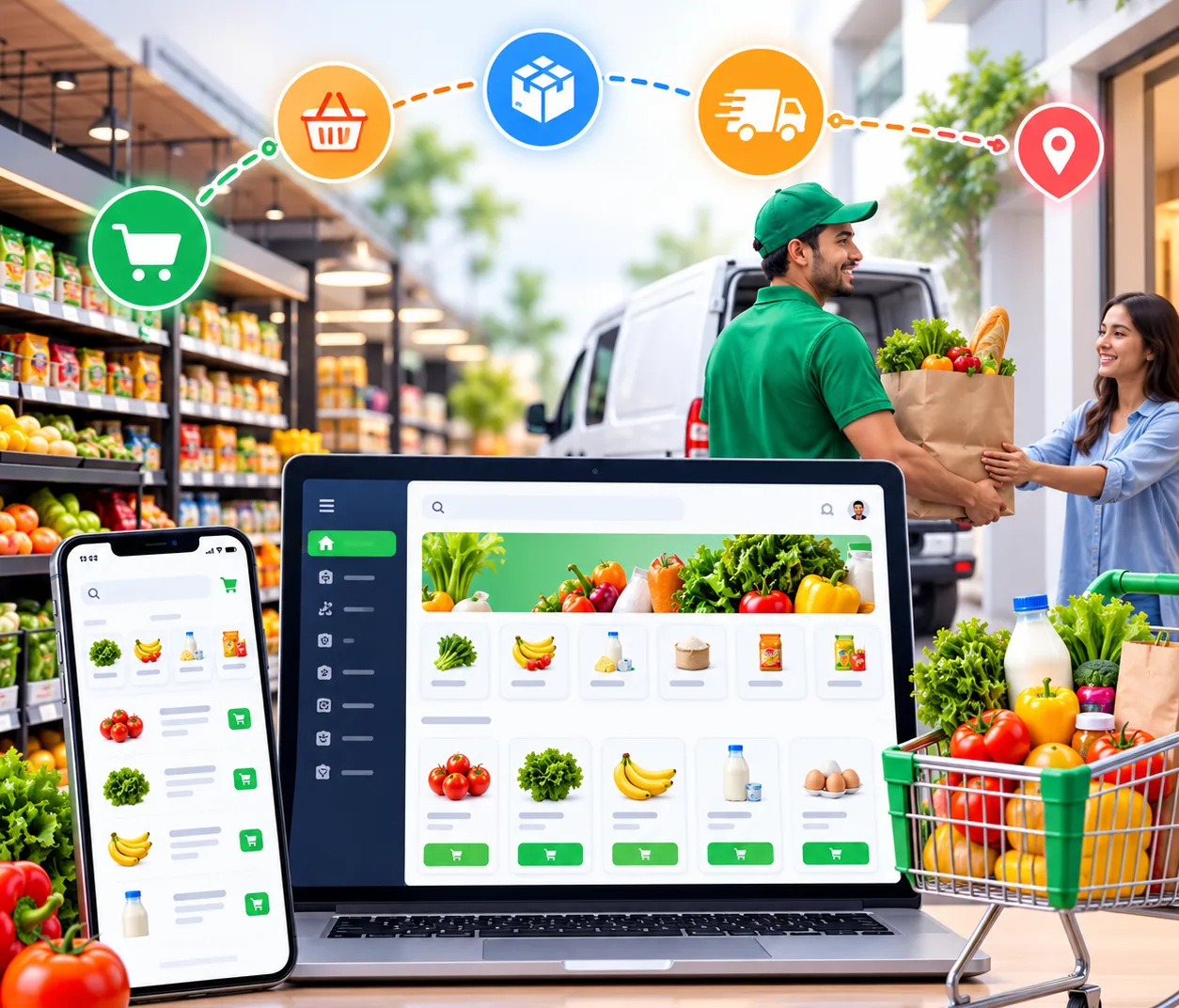
Connect the order a customer places with the groceries your team can actually fulfil. Unity Infoway helps businesses plan grocery ordering and delivery software around catalogues, stock visibility, picking, substitutions, payments and delivery operations.
Choose the operating model first: one store, a store network or a marketplace. Then define the customer, store and delivery experiences needed to support it, without assuming every model belongs in the first release.
Does the online order match what happens in the store?
The difficult part is often not accepting the order. It is keeping availability, substitutions, payment adjustments and delivery commitments aligned after checkout.
Availability changes after checkout
Define which system owns stock, when quantities are reserved and how unavailable items are handled before a customer is charged incorrectly.
Substitutions create confusion
Capture replacement preferences and approval steps so pickers do not make assumptions about what the customer will accept.
Delivery promises exceed capacity
Plan service areas, cut-off times and slot limits around the fulfilment capacity your operation can support.
Refund and settlement records do not reconcile
Keep original amounts, approved adjustments and payment references connected to the order and the relevant store.
Join us on your path to future success

Connect browsing, fulfilment and delivery
Design the normal order and the exceptions together. Product unavailability, changed weights, failed payments and unsuccessful delivery should all have defined routes.
Browse and check serviceability
Show relevant products, store availability and the agreed delivery area.
Build the basket
Capture quantities, preferences and eligible delivery or pickup options.
Confirm the order
Validate price, slot capacity, payment status and stock rules.
Pick and resolve exceptions
Record picked items, substitutions, missing products and any customer approval.
Dispatch and deliver
Assign fulfilment responsibility and update order progress through delivery or pickup.
Reconcile and support
Handle approved adjustments, refunds, delivery exceptions and customer queries.
A platform that reflects grocery operations
Select the required customer, store and admin capabilities. Marketplace settlement, native apps and route optimization are separate scope decisions, not default inclusions.
Product catalogue
Organize categories, variants, units, images and essential product information.
Pricing and promotions
Configure agreed pricing, offers, limits and promotion eligibility rules.
Availability and inventory
Define stock ownership, availability updates, reservations and out-of-stock behaviour.
Cart and checkout
Capture addresses, fulfilment options, order notes and supported payment choices.
Slots and service areas
Set delivery zones, pickup options, cut-offs and capacity rules.
Picking and substitutions
Support picking lists, replacement preferences and approval of order changes.
Choose the fulfilment model before the feature list
A multi-vendor marketplace needs different controls from a supermarket’s own delivery service. Agree stock ownership, customer support and settlement responsibilities at the start.
Independent grocers
Launch a focused store catalogue with manageable ordering and fulfilment rules.
Supermarket networks
Assess store selection, localized availability and multi-location operations
Delivery-led businesses
Coordinate a defined sourcing model, order handling and dispatch responsibility.
Marketplace operators
Scope seller onboarding, commissions, settlement and dispute handling as additional work.

Link commerce with store and delivery operations
Our e-commerce development services can support the storefront and checkout discussion. Mobile app development can be assessed for customers, pickers or delivery teams where dedicated apps are needed. Existing POS, inventory, maps and delivery-provider integrations depend on supported access, commercial terms and tested data exchange.
Live stock accuracy depends on reliable source data and synchronization. Weighed-item pricing, automatic refunds, vendor settlements and live location tracking require explicit rules. No platform should promise fulfilment speed or coverage that the operating team has not validated.
Why work with Unity Infoway?
Focus on the order exceptions as carefully as the happy path. Review Unity Infoway’s quality assurance process when agreeing checkout, fulfilment and payment acceptance tests.
Explore related solutions
Restaurant management software – For businesses with a separate restaurant or prepared-food service operation.
WhatsApp chatbot and automation – For eligible order enquiries and consent-based fulfilment updates.

Frequently Asked Questions
Should we start with a single store or a marketplace?
Start with the model you can operate reliably. A single-store platform has fewer ownership and settlement decisions. A marketplace adds sellers, commissions, payouts and disputes. These are business and software requirements, not simply a switch in the checkout.
Can the platform support weighed products and substitutions?
These workflows can be scoped explicitly. Define estimated versus final weight, allowed substitutions, customer approval and payment adjustment. The approach must fit the payment provider and fulfilment process, rather than assume the final basket always matches checkout.
Can it connect to our existing POS or inventory system?
Integration depends on an authorized API, connector or usable import process. Decide which system owns product, price and stock data. Test update frequency, reservations, failures and reconciliation before describing inventory as live or synchronized.
How are refunds and partial orders handled?
The platform can be designed to record item-level changes and approved refunds. The actual payment flow depends on the gateway and the business rules. Separate order status, payment status and settlement records so staff can investigate discrepancies.
Accordion TitleDoes delivery tracking mean live GPS tracking?
Not necessarily. Basic tracking can show order stages such as packed, dispatched and delivered. Live location requires a suitable app or provider integration, device permissions and data-handling controls. Confirm the intended experience and dependencies during scoping.
Are Android and iOS apps included?
Native customer or delivery apps are separate scope choices. A mobile-responsive web platform may suit an initial launch. Compare the required device features, user journeys, operating costs and maintenance responsibilities before committing to multiple applications.
What do we need to prepare before development starts?
Prepare product data, images, units, pricing rules, service areas, fulfilment responsibilities and sample
order exceptions. Also identify payment and stock systems. Clear operational decisions reduce
uncertainty more effectively than a long feature list without ownership.
What affects grocery platform cost and delivery time?
The main drivers are the operating model, apps, catalogue complexity, substitutions, integrations and marketplace features. Share your intended launch area and fulfilment process to receive a phase-wise proposal with third-party charges identified separately.
Address
412, 4th Floor, Radhe Infinity, Rakshashakti Circle, Kudasan, Gandhinagar – 382421.