
Shopify Development Company
Unity Infoway provides Shopify development services for brands that need a fast, flexible and maintainable commerce experience – from new store builds and custom themes to Shopify Plus, B2B, integrations, migrations, checkout extensions and headless storefronts.
We combine storefront UX, Shopify engineering and integration planning so the store is not just visually polished, but practical for merchandising, operations, SEO, analytics and long-term growth. Whether you are launching a new brand, replacing a legacy commerce platform or improving an existing Shopify store, we can shape the implementation around your catalogue, markets, workflows and technical constraints.
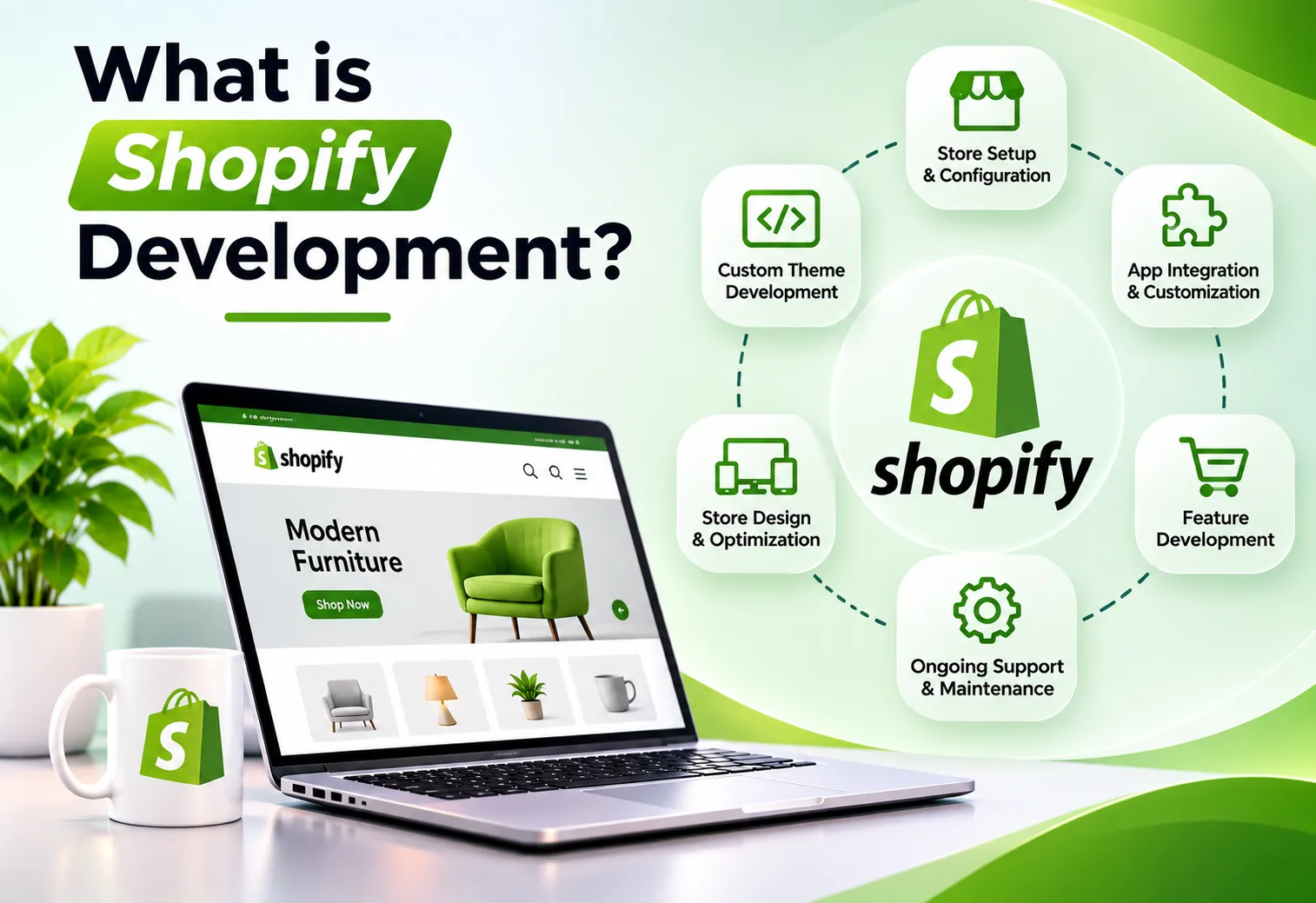
What is Shopify development?
Shopify development is the design, customization, integration and ongoing engineering of commerce experiences built on Shopify. It can include theme development, custom storefront features, Shopify apps, third-party integrations, checkout extensions, B2B workflows, data migration and headless commerce using Shopify APIs.
The right Shopify implementation depends on the business model. A standard theme can be ideal for a focused D2C launch, while a multi-market brand, B2B business or integration-heavy retailer may need deeper theme engineering, custom apps, system integrations or a headless architecture.
Shopify Development Services We Offer
Use outcome-led capability cards rather than generic platform buzzwords.
Shopify Store Development
Build new Shopify stores around your catalogue, customer journey, merchandising model, operational workflows and growth plans.
Custom Shopify Theme Development
Create responsive, flexible Liquid themes with reusable sections, JSON templates, app blocks and merchant-friendly controls.
Shopify Store Redesign
Modernize an existing storefront with improved navigation, product discovery, product detail pages, mobile UX, conversion paths and visual consistency.
Shopify Plus Development
Support complex commerce requirements, enterprise integrations, advanced automation, checkout customization and high-growth operational needs where Shopify Plus is appropriate.
Shopify B2B Development
Configure and extend B2B experiences for companies, catalogs, buyer-specific pricing, account workflows, payment/shipping rules and system integrations.
Shopify App & Integration Development
Build custom apps and integrations for ERP, CRM, PIM, fulfillment, logistics, accounting, identity, marketing, marketplaces and internal workflows.
Checkout Extensibility
Extend supported checkout surfaces using Shopify checkout technologies, UI extensions, Functions and branding capabilities instead of fragile legacy hacks.
Shopify Migration Services
Move from WooCommerce, Magento, custom platforms or another commerce stack while planning product data, customers, orders, redirects, integrations and launch risk.
Headless Shopify Development
Use Storefront APIs and Hydrogen where a custom frontend is justified by experience, content, integration or multi-surface requirements.
Shopify Performance Optimization
Improve storefront speed and Core Web Vitals by addressing Liquid rendering, app/script overhead, images, fonts, JavaScript and theme architecture.
Shopify SEO Implementation
Implement crawlable templates, metadata controls, structured product content, redirects, canonicalization, internal linking and performance foundations.
Shopify Maintenance & Support
Handle platform updates, API-version reviews, theme improvements, app changes, bug fixes, performance monitoring and ongoing commerce enhancements.
Discuss Your Business Software Requirements

What We Build with Shopify
Connect platform capability to business models buyers actually recognize.
D2C Brand Stores
Conversion-focused storefronts for consumer brands with flexible merchandising, campaigns, bundles, subscriptions and content-led discovery.
B2B Commerce Portals
Company accounts, catalog/pricing logic, buyer workflows, payment terms, sales-assisted ordering and back-office integrations.
Multi-Market Stores
Localized commerce across currencies, languages, catalogs, domains and regional content using the Shopify capabilities appropriate to the business.
Retail + Online Commerce
Connected online and store experiences with inventory, customer, fulfillment and POS- related workflows where Shopify fits the operating model.
Subscription Commerce
Recurring commerce experiences using compatible subscription architecture and apps, with careful integration into product, checkout and account flows.
High-SKU Catalogues
Structured collections, filtering, search, metafields/metaobjects and merchandising patterns for large or complex product ranges.
Marketplace-Connected Stores
Shopify storefronts connected to marketplaces, feeds, fulfillment networks, accounting or channel management systems.
Custom Commerce Experiences
Specialized configurators, quote flows, gated catalogs, product builders, account experiences and operational workflows where standard theme capability is insufficient.
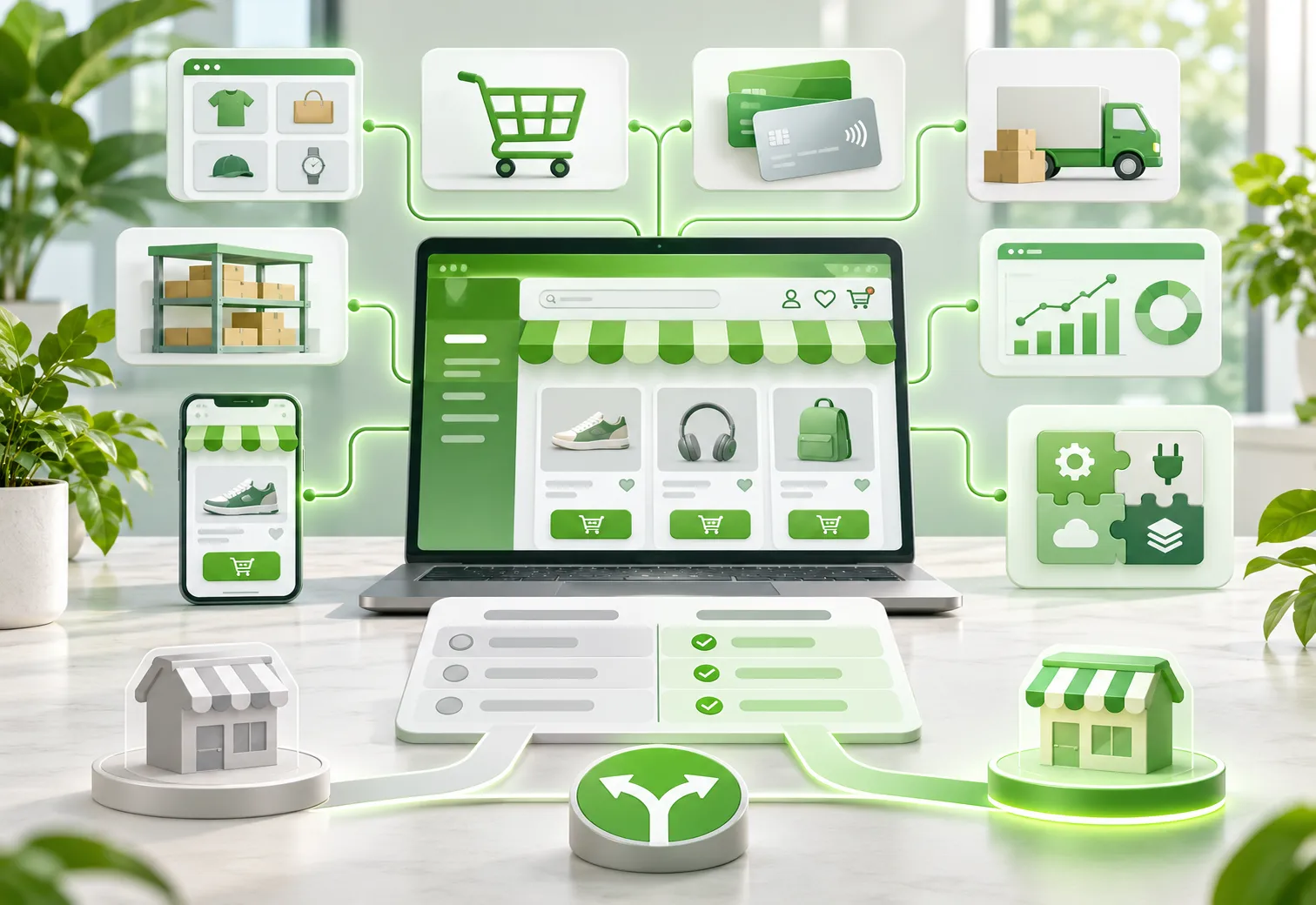
Is Shopify right for every commerce project?
No. Shopify is a strong option when a business values managed commerce infrastructure, a mature ecosystem, rapid merchandising and a reliable checkout foundation. But some projects have requirements that point toward WooCommerce, Magento, a custom platform or a composable architecture. Platform selection should be based on catalogue complexity, operational workflows, integration depth, ownership requirements, international strategy, B2B needs and total cost of change – not popularity alone.
Shopify apps, APIs & integrations
Make integration capability a core differentiator for serious Shopify projects.
ERP & Accounting
Synchronize products, inventory, customers, orders, invoices, taxes or fulfillment data with back-office platforms.
CRM & Customer Systems
Connect customer, lead, lifecycle and account data while defining a clear system of record.
PIM & Product Data
Coordinate enriched product data, taxonomy, attributes, media and market-specific content.
Fulfillment & Logistics
Integrate warehouse, 3PL, carrier, shipping, tracking and returns workflows.
Payments & Finance
Connect supported payment, reconciliation or finance workflows without bypassing platform security boundaries.
Marketing & Analytics
Integrate consent-aware analytics, email, messaging, attribution and customer-data workflows.
Frequently Asked Questions
What does a Shopify development company do?
A Shopify development company designs, builds, customizes, integrates, migrates and maintains Shopify commerce experiences. Work can include store setup, custom themes, Shopify apps, API integrations, checkout extensions, Shopify Plus/B2B, performance optimization and headless storefronts.
Can you build a completely custom Shopify store?
Yes. Shopify can support custom storefront design through Liquid themes, reusable sections and structured content. For requirements that exceed a theme architecture, a headless storefront can use Shopify commerce APIs while the frontend is built separately.
Do you provide Shopify Plus development?
Yes, we can support Shopify Plus projects involving advanced storefront requirements, integrations, B2B workflows, checkout extensibility and operational automation. The exact scope should be based on the merchant’s plan, business requirements and available Shopify features.
Can Shopify support B2B eCommerce?
Yes. Shopify provides native B2B capabilities for company customers, catalogs, pricing and buyer workflows, with feature availability depending on the merchant plan. B2B implementations often also require ERP, CRM, payment, shipping or account-workflow integrations.
Can you migrate WooCommerce or Magento to Shopify?
Yes, subject to the source platform and available data. A migration should cover product/customer/order data, content, redirects, SEO, apps, integrations, analytics and launch reconciliation - not just product import.
Can you customize Shopify checkout?
Shopify provides supported checkout customization technologies including checkout extensions, Shopify Functions and branding capabilities. What can be changed depends on the plan, checkout surface and specific platform API, so requirements should be validated before development.
Do you build custom Shopify apps?
We can build Shopify apps and private business integrations for workflows that cannot be handled cleanly by theme code or off-the-shelf apps. New Admin API work should be designed around Shopify’s GraphQL Admin API and supported authentication/access-scope model.
Address
412, 4th Floor, Radhe Infinity, Rakshashakti Circle, Kudasan, Gandhinagar – 382421.