
Matrimonial Portal Software
- Home
- Business Software Solutions for Your Industry
- Matrimonial Portal Software

Simplify Matchmaking, Profile Management, and Matrimonial Services with a Smart Digital Platform
Build a matrimonial platform around trust, clear membership rules and a manageable operating process. Unity Infoway helps portal owners plan software for member profiles, search, expressions of interest, subscriptions and administrative moderation.
This is software for businesses operating a matrimonial service, not a consumer matchmaking service from Unity Infoway. Define your audience, adult-member eligibility, privacy model and support responsibilities before deciding which features to launch.
Can your portal grow without losing control of trust and privacy?
Profile creation is only the beginning. The business also needs to manage visibility, paid access, reports of misuse and the meaning of any verification claim.
Profiles reveal more than members expect
Define what is public, visible to signed-in members or released only after an approved interaction. Keep private contact details protected.
Verification badges create false confidence
Separate phone or email confirmation from identity checks and human review. Make the meaning and limits of each badge clear.
Membership access is inconsistent
Tie paid features, validity, renewals and refunds to explicit plan rules rather than manual promises made by different staff members.
Moderation cannot keep up with reports
Give administrators a structured queue for profile review, reported conduct, account restrictions and documented follow-up.
Discuss Your Matrimonial Portal Requirements

Connect registration, member interaction and moderation
Design consent and privacy into each stage. An adult member should understand how their information is used and which interactions they are choosing to accept.
Register and accept terms
Collect essential account details, adult eligibility and required permissions.
Create and review the profile
Capture approved fields and route relevant content through the review process.
Set visibility and preferences
Let members control agreed profile visibility and matching preferences.
Discover and express interest
Support search, shortlists and consent-based requests under membership rules.
Manage access and communication
Apply plan entitlements and approved contact or messaging controls.
Support and moderate
Handle reports, account changes, privacy requests and membership queries.
Capabilities for members and the team behind the portal
Choose the features that fit your operating model. Verification services, advanced matching, native apps and communication integrations require separate assessment and approval.
Member registration
Create accounts with agreed eligibility, verification steps and access controls.
Profile management
Maintain member-supplied details, photographs and permitted supporting information.
Privacy controls
Define visibility settings, contact disclosure rules and authorized administrative access.
Search and discovery
Provide filters, saved preferences and shortlists based on agreed profile fields.
Interest requests
Track invitations, acceptance, rejection and other consent-based interaction states.
Membership plans
Configure entitlements, validity, renewals and clear access restrictions.
Match the platform to the service you intend to operate
A marriage bureau with relationship managers needs different tools from a self-service portal. Decide what people handle manually and what software should coordinate.
Marriage bureaus
Organize member records and assisted introduction workflows.
Independent portal brands
Build a self-service experience with clear privacy and membership rules.
Community-focused services
Define appropriate eligibility and user-chosen preferences with careful policy review.
Existing operators
Plan migration from legacy records with permission and visibility checks.
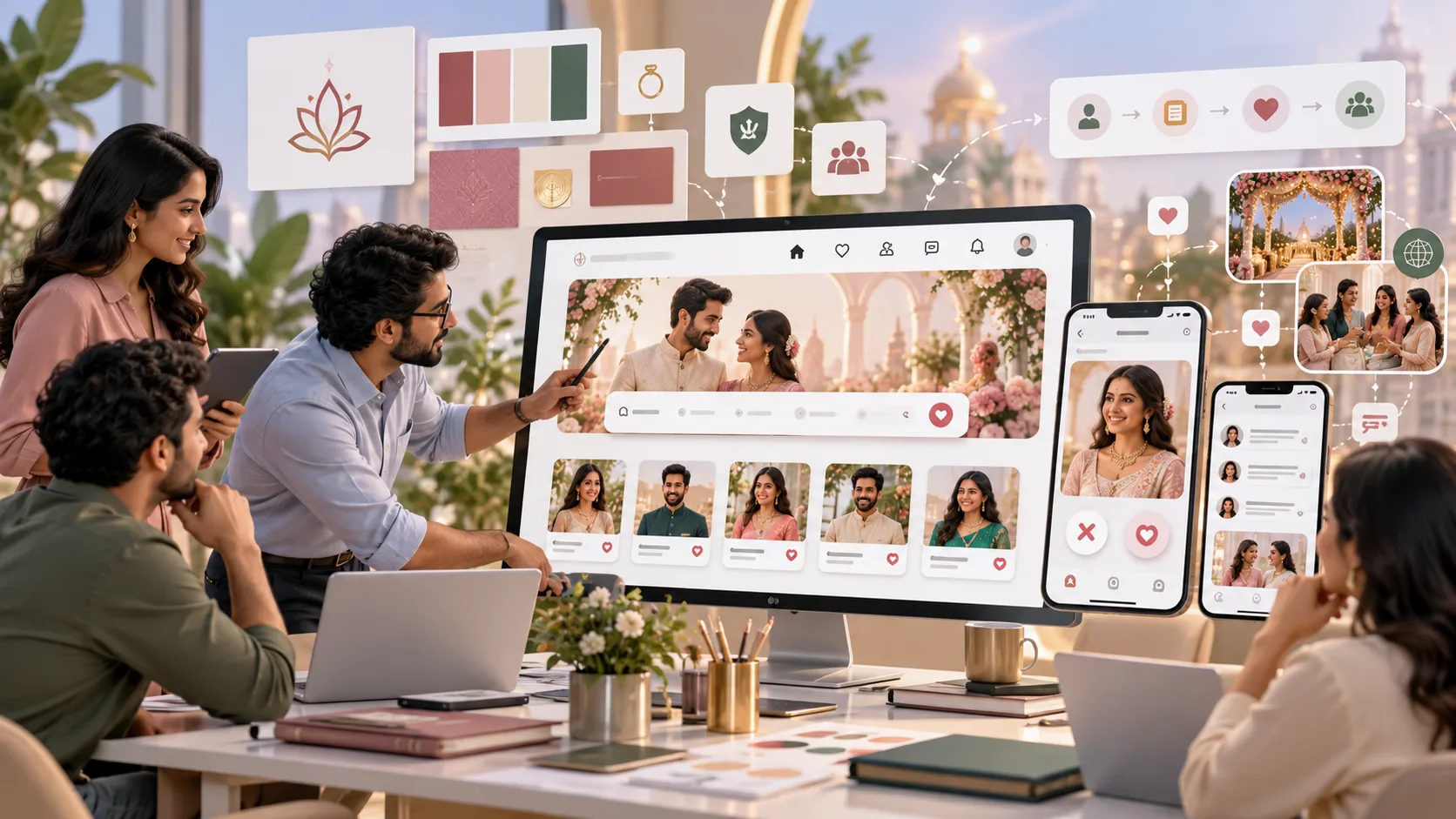
Build the portal, brand and member experience together
Assess custom web development for the portal and mobile app development when a dedicated application is justified. Our branding and design services can support a consistent experience. Payment, email, SMS and verification providers need eligibility, consent and data-access review; no provider connection should be assumed.
Keep sensitive member records behind appropriate access controls. Public landing pages and private profile areas need separate indexing and visibility decisions. A search ranking, verification badge or automated suggestion must not be described as a guarantee of identity, safety or compatibility.
Why work with Unity Infoway?
Begin with the trust and operating model, not a copy of another portal’s feature list. Agree what members can see, what staff can change and what happens when an interaction is reported before expanding the platform.
Explore related solutions
Video conferencing software – For a separately assessed, consent-based consultation or introduction
experience

Frequently Asked Questions
Does Unity Infoway provide matches or operate the matrimonial service?
No. This offering concerns software development and implementation for a business operating its own matrimonial service. The operator remains responsible for membership rules, moderation, customer support and the claims made about its service.
Can we offer free and paid memberships?
Membership plans can be designed with explicit entitlements, validity and renewal rules. Define what changes after payment, how refunds are handled and whether renewal is automatic. Payment-provider capabilities and commercial terms must be reviewed before implementation.
Can profiles be verified?
A verification workflow can be scoped, but each check must be described accurately. Email or phone confirmation is not a full identity or background check. Human review and third-party checks have their own limitations, permissions and operating responsibilities.
Can member profiles remain private and hidden from search engines?
Private areas should use authorization controls, with search-indexing settings considered separately. Do not rely only on a noindex instruction to protect personal data. Define what guests, signed-in members and administrators can access, including photographs and contact details.
Can the portal support mobile apps and multiple languages?
Both can be assessed as separate requirements. Agree the launch languages, translation ownership and the features needed on each device. Native apps, messaging and moderation tools require development and maintenance beyond a basic responsive website.
Can AI recommend matches automatically?
Recommendation features can be assessed, but start with clear, user-chosen preferences and explainable rules. Any advanced model needs evaluation, privacy review and a correction process. It should assist discovery, not claim to predict relationship success or replace member judgment.
Can we migrate existing members and receive the source code?
Migration depends on lawful access, member permissions, record quality and compatible fields. Source-code delivery and ownership for custom work must be defined in the agreement, while third-party software retains its own licence conditions.
What determines the cost of a matrimonial portal?
Cost depends on the member experience, privacy controls, moderation, membership rules, integrations, apps and migration. Share your operating model and first-release priorities for a scoped proposal. Avoid treating a basic directory and a moderated paid platform as equivalent projects.
Address
412, 4th Floor, Radhe Infinity, Rakshashakti Circle, Kudasan, Gandhinagar – 382421.