
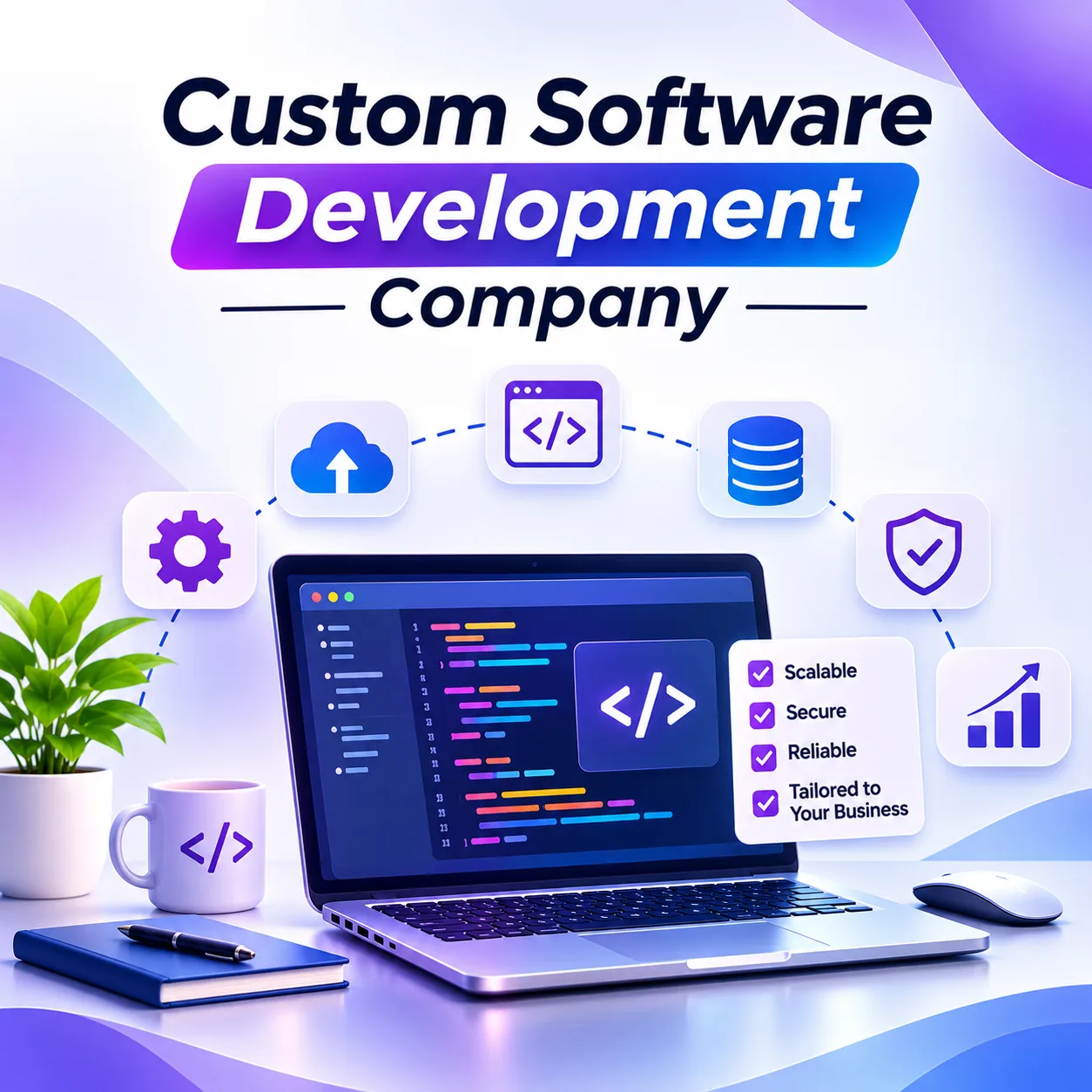
Custom Software Development Company
Unity Infoway designs and develops custom software around the way your business actually works. We build SaaS products, customer and partner portals, internal operations systems, workflow applications, CRM/ERP- style platforms, integrations and modern digital products that replace disconnected tools with one scalable software foundation.
Our custom software development services cover discovery, UX, architecture, web and mobile development, APIs, data, AI integration, QA, cloud deployment, modernization and ongoing product engineering. The technology stack is selected around the product, users, integrations, security requirements and long-term roadmap – not forced into a one-size-fits-all template.
Custom software development services
Core commercial services section – ready for a card grid or grouped layout.
Custom Web Application Development
Build secure browser-based applications for customers, partners, staff and operations teams with role-based workflows, dashboards, approvals and integrations.
SaaS Product Development
Design and engineer multi-user or multi-tenant SaaS products with onboarding, subscriptions, permissions, APIs, notifications, analytics and scalable cloud architecture.
Enterprise & Business Software
Develop systems that support complex business rules, departments, locations, permissions, reporting, operational workflows and enterprise integrations.
Customer, Partner & Vendor Portals
Create self-service portals for accounts, documents, orders, projects, tickets, quotes, approvals, payments and collaboration.
Workflow & Process Automation Software
Replace email, spreadsheets and manual follow-ups with structured workflows, assignments, approvals, alerts, audit trails and management visibility.
Custom CRM & ERP-Style Systems
Build business applications around sales, service, procurement, inventory, projects, production, finance- adjacent workflows and operational reporting where packaged ERP is not the right fit.
API & Systems Integration
Connect custom software with ERP, CRM, accounting, payments, logistics, communications, identity, analytics and third-party platforms.
Data-Driven Applications & Dashboards
Turn operational data into searchable records, KPI dashboards, reports, alerts and decision-support workflows.
AI-Enabled Software Development
Add document intelligence, copilots, RAG, AI agents or automation where AI improves a specific workflow and can be governed and evaluated safely.
Legacy Software Modernization
Refactor, re-architect, migrate or incrementally replace aging applications while protecting critical business rules and data.
Mobile-Connected Business Applications
Extend custom platforms with mobile experiences for field teams, customers, operators or device-connected workflows.
Ongoing Product Engineering
Continue improving the product after launch through roadmap delivery, optimization, integrations, support, QA and technical modernization.
Discuss Your Business Software Requirements

Software product engineering
Position Unity Infoway as a long-term product partner, not only a project vendor.
Discovery
Problem definition, user roles, workflow mapping, integrations, constraints, priorities and success criteria
Product definition
Feature map, MVP boundary, acceptance criteria, UX flows and backlog
Architecture
System boundaries, data model, APIs, security, deployment and scalability decisions
Build
Frontend, backend, mobile where required, integrations, test automation and CI/CD
Launch
UAT, production readiness, migration, monitoring, runbooks and release coordination
Scale
Performance, reliability, new modules, analytics, integrations, security hardening and roadmap delivery
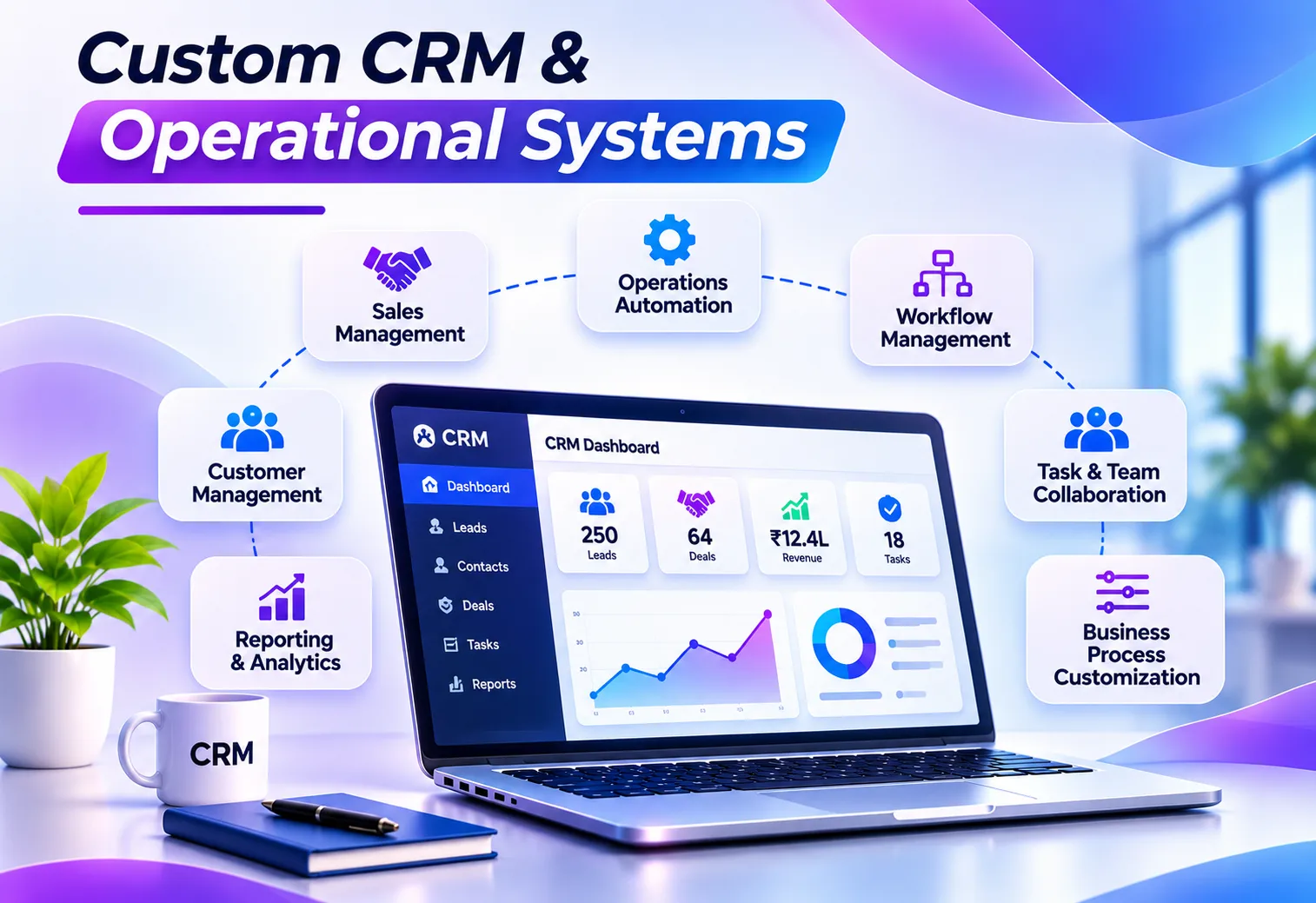
Custom CRM & operational systems
When a standard CRM or ERP does not fit the workflow, Unity Infoway can develop a focused system around the specific data model, approvals, roles, integrations and reporting the business actually needs. The goal is not to recreate every ERP module – it is to build the operating system that removes friction from the high-value process.
Custom CRM, ERP-style systems & portals
Differentiate custom business software from Odoo implementation and packaged solutions.
Customer portal
Accounts, projects/orders, documents, payments, support, messages and status tracking
Partner portal
Leads, opportunities, resources, referrals, commissions, approvals and shared documents
Vendor portal
Purchase orders, documents, delivery status, invoices, compliance records and communication
Employee portal
Requests, tasks, documents, approvals, schedules, policies and dashboards
Frequently Asked Questions
What does a custom software development company do?
A custom software development company designs, builds, integrates, tests, deploys and maintains software created for a specific business or product. Typical work includes SaaS products, business systems, portals, workflow applications, APIs, integrations and modernization.
When should a business choose custom software instead of off-the-shelf software?
Custom software is usually worth considering when standard products require major workarounds, critical workflows are unique, several systems must be connected, the customer experience is a differentiator, or the software itself is the product.
How long does custom software development take?
Timeline depends on scope, integrations, UX, data migration, security and testing. A focused MVP may be delivered in phases, while complex enterprise platforms can require several months or a longer roadmap. Discovery should establish a realistic plan.
How much does custom software development cost?
Cost depends on workflows, user roles, interfaces, integrations, data, security, performance, migration and support requirements. Unity Infoway recommends defining the solution scope before preparing a project estimate.
Can Unity Infoway build an MVP first?
Yes. For new products or uncertain requirements, an MVP or phased release can focus on the smallest workflow that proves value, then expand the product from real user feedback and business priorities.
Can you modernize existing legacy software?
Yes. Modernization can include framework upgrades, UI changes, cloud migration, API enablement, database changes, refactoring or incremental module replacement depending on the condition of the current system.
Can custom software integrate with our existing ERP, CRM or accounting tools?
Yes. Integration can be designed through APIs, webhooks, queues, file exchange or other supported methods. The discovery phase should confirm each system, its API limitations, data ownership and failure- handling requirements.
Address
412, 4th Floor, Radhe Infinity, Rakshashakti Circle, Kudasan, Gandhinagar – 382421.